
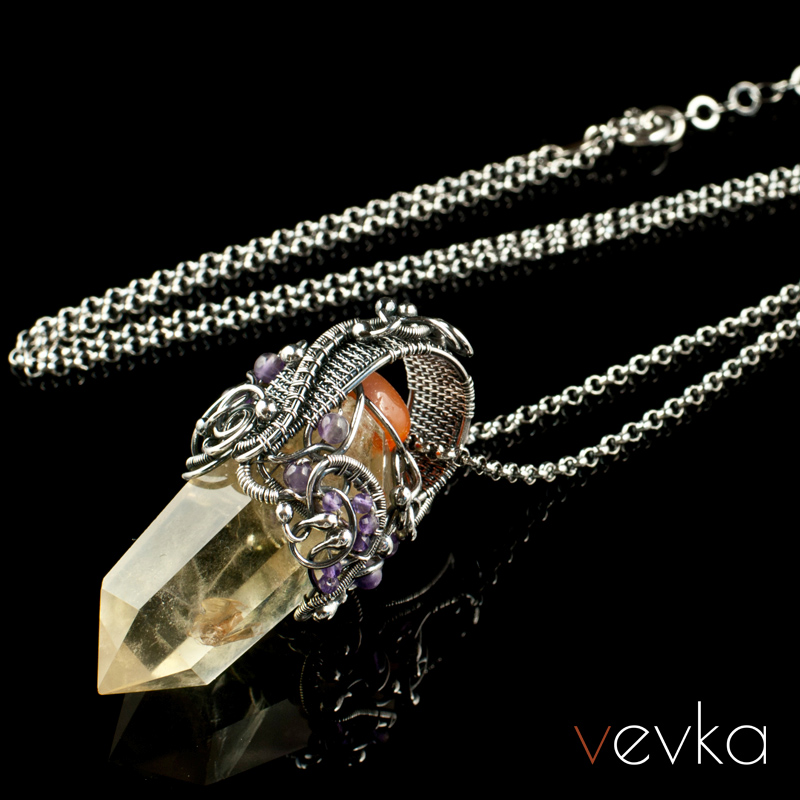
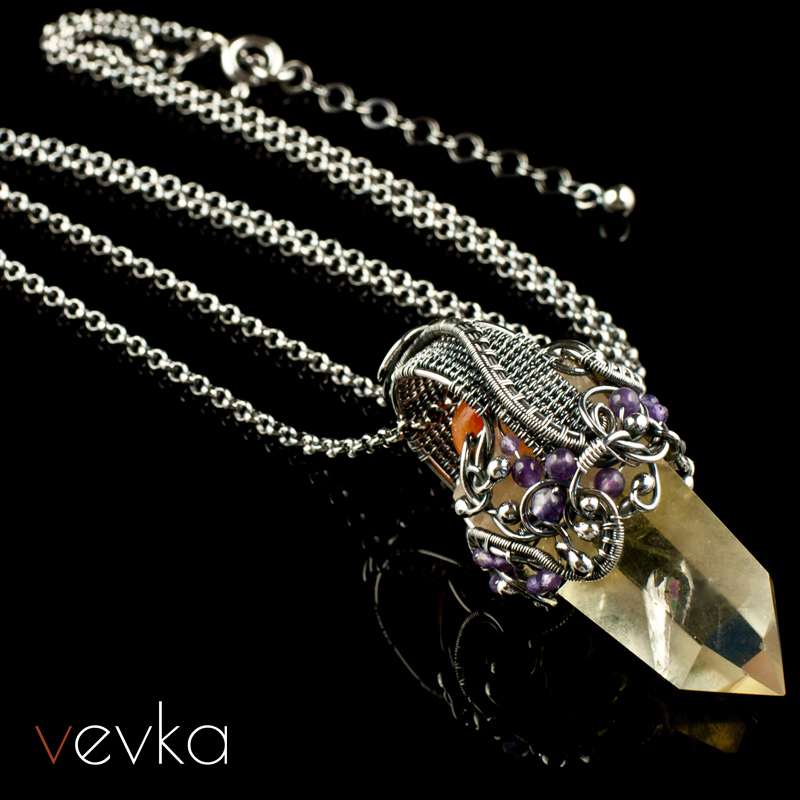
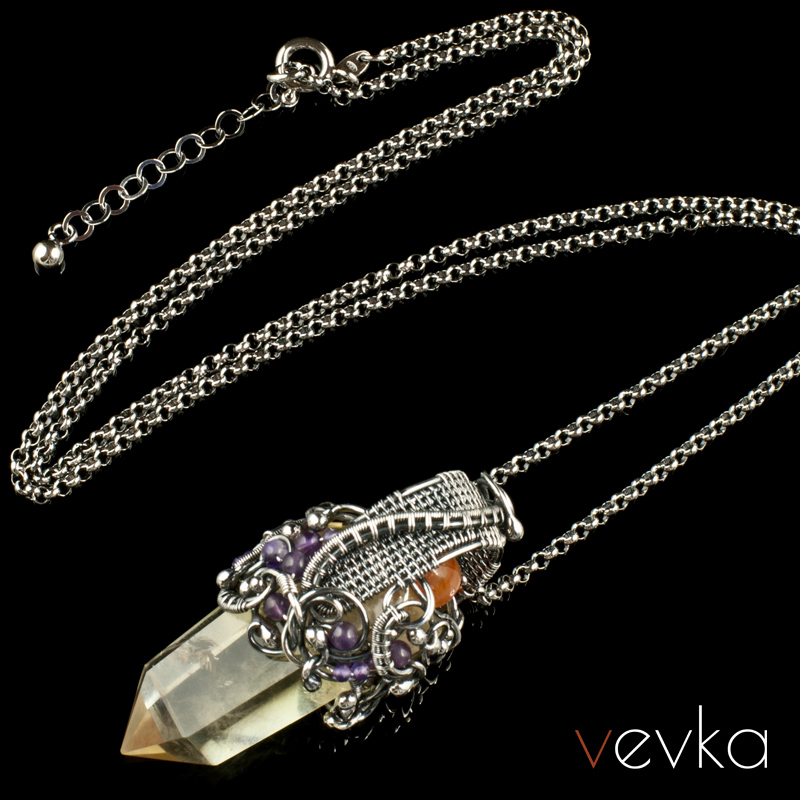
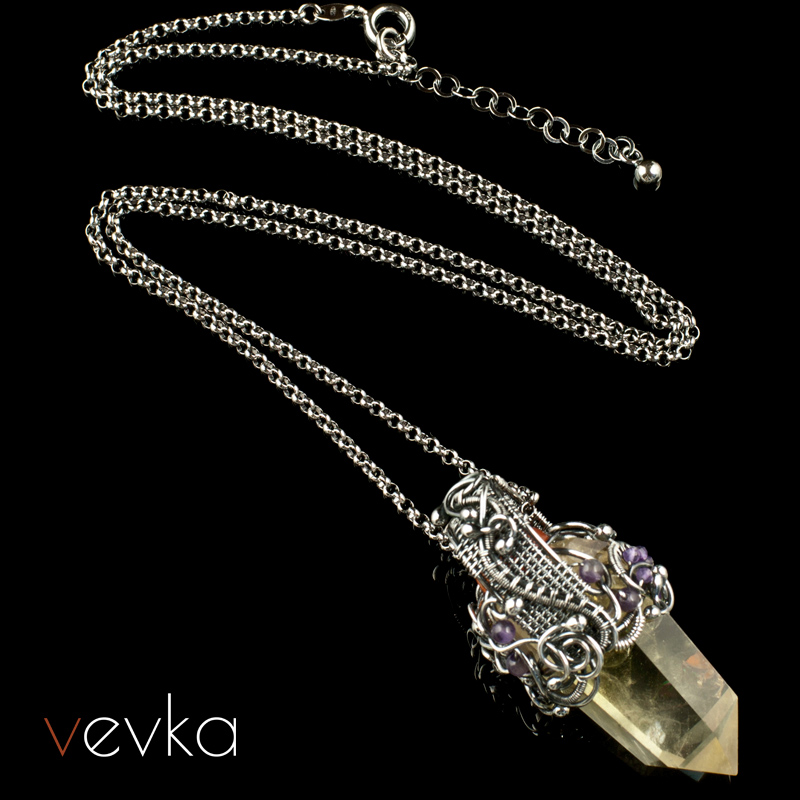
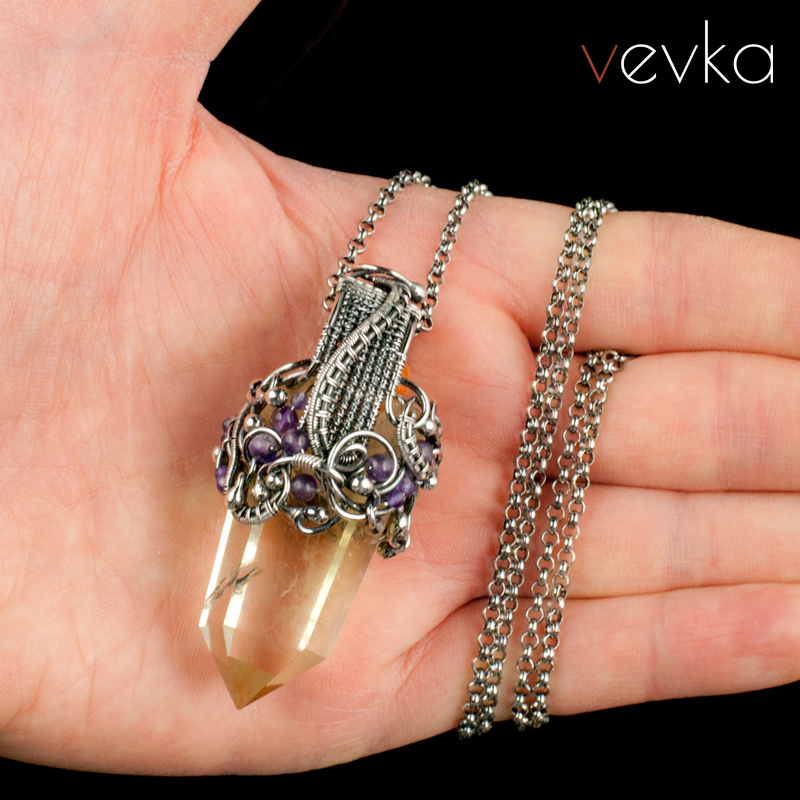
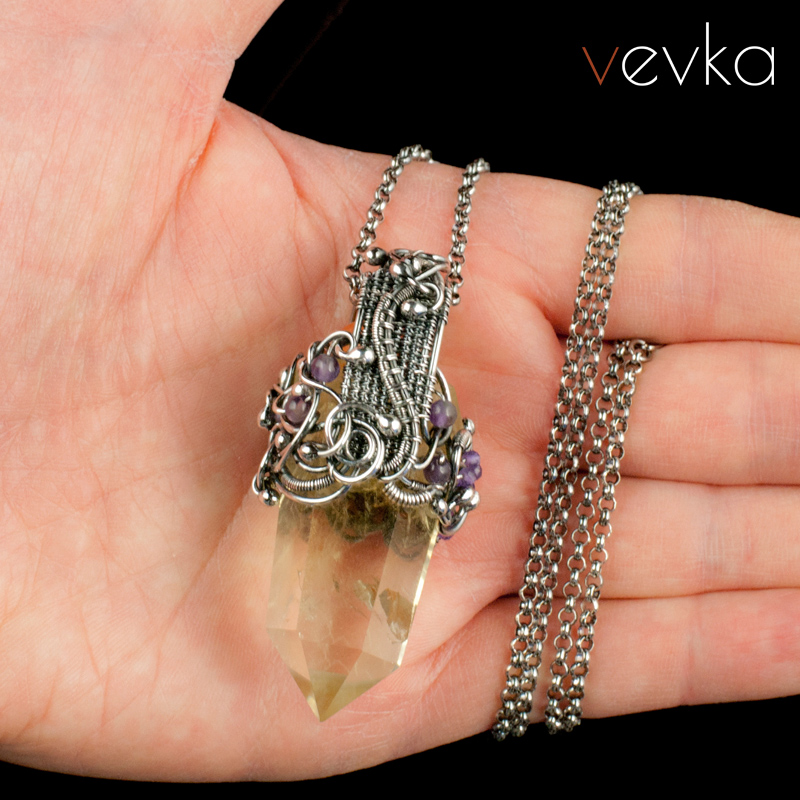
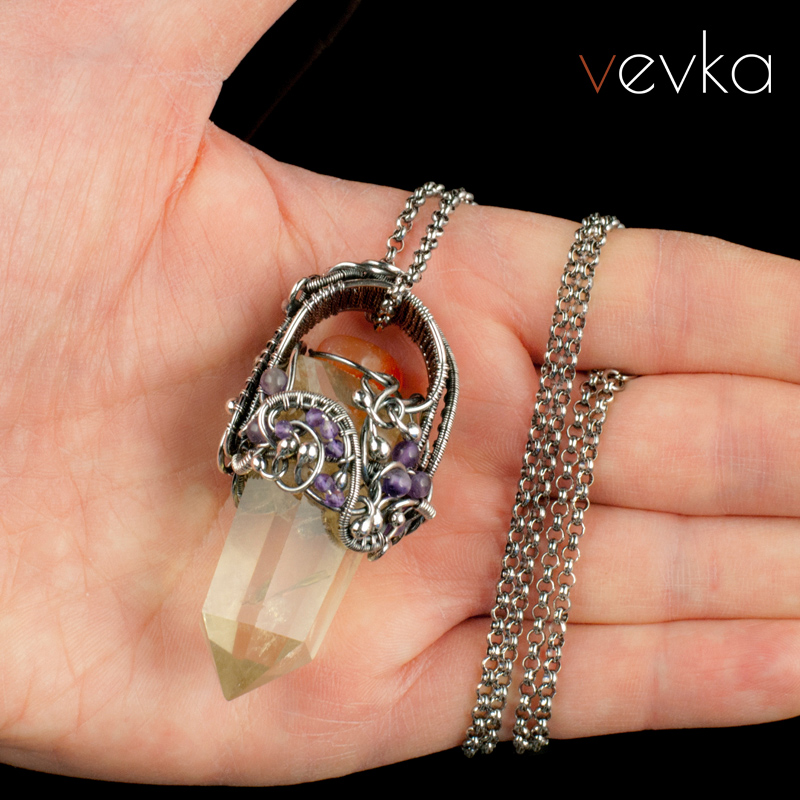
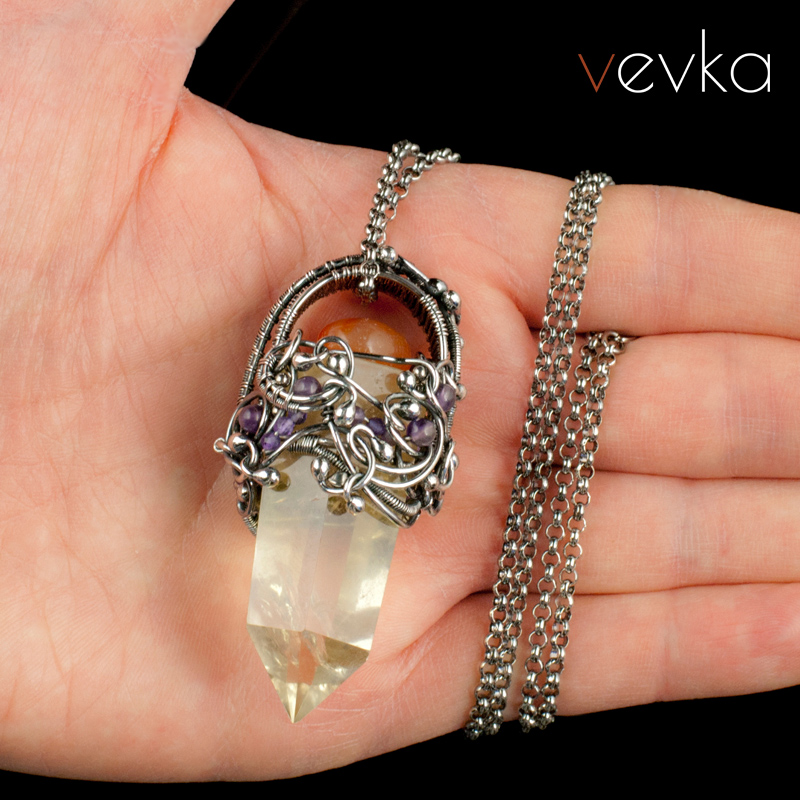
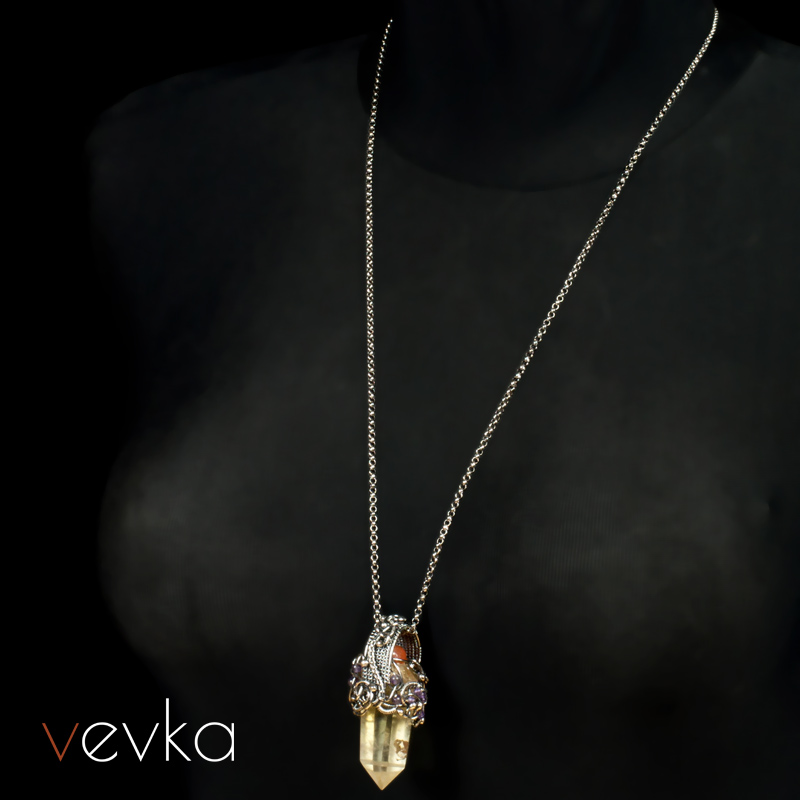

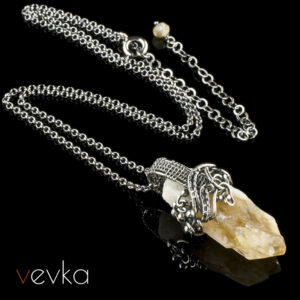
Ametrine is a naturally occurring bicolored, purple-yellow variety of quartz that is both amethyst and citrine. I decided to use this duo in the creation of this pendant. A magical pendant – talisman made from beautifully faceted natural citrine, small, faceted and smooth amethyst beads, and silver of 999 and 925 purity. At the top of the citrine obelisk is adorned with a carnelian cabochon. The piece is entirely handmade from scratch using the wire wrapping technique. A very labor-intensive and unique design. The entire piece is oxidized and carefully polished.
Materials:
– Citrine
– Carnelian
– Amethyst
– Silver of 925 and 999 purity
Colors:
Yellow, purple, orange, silver, graphite
Dimensions:
Length: pendant approx. 6 x 3 x 3 cm (measured with the bail). Chain – 73 cm plus a few cm extension. Weight: 55 g.
Citrine, a captivating variety of quartz, is cherished for its golden-yellow hues, reminiscent of sunlit days. Its name, derived from the French word ‘citron’ meaning lemon, reflects its refreshing citrus color. Historically, citrine has adorned jewelry pieces dating back to ancient Greece and Rome, showcasing its enduring appeal. This gemstone was particularly popular during the Art Deco period, where it was frequently used in lavish jewelry designs. While natural citrines are rare, making their occurrence a valued discovery, much of the citrine on the market is produced by heat-treating amethyst and smoky quartz. Citrine jewelry, known for its vibrant color, ranges from delicate, pale yellow to deep, burnt orange shades. A citrine pendant often becomes the centerpiece of an ensemble, with the stone’s rich color and clarity making it a favored choice for statement pieces. Celebrated not only for its beauty, citrine, also known as the “merchant’s stone,” is traditionally believed to bring prosperity and success, adding a layer of intrigue to its already fascinating character.
Carnelian, a semi-precious stone with a rich history, is renowned for its warm, reddish hues ranging from orange to deep red. This form of chalcedony, a mineral in the quartz family, gets its distinctive color from iron oxide impurities. Found in various parts of the world, including India, Brazil, and Egypt, carnelian has been used since ancient times, particularly valued in cultures such as the Egyptians and Romans. It was often used for signet rings and cameos due to its hardness and ease of carving. Carnelian jewelry, with its vibrant color, has been worn for centuries, believed by some to provide courage and vitality to its wearers. Today, this stone continues to be prized for its beauty and historical significance, making it a timeless choice for jewelry enthusiasts.
Amethyst, a striking purple variety of quartz, has been esteemed throughout history for its vibrant color and beauty. This gemstone’s origins are global, with major deposits found in Brazil, Uruguay, Siberia, and Sri Lanka, amongst other locations. Historically, amethyst was as expensive as ruby and emerald until the 19th century when large deposits in Brazil were discovered. Its name comes from the Greek word “amethystos”, which means “not intoxicated”, reflecting a belief that the stone protected its owner from drunkenness. Amethyst jewelry has been worn for centuries, valued not only for its aesthetic appeal but also for its supposed calming and purifying properties. In contemporary times, amethyst remains a popular choice for jewelry, with its rich purple hues bringing a touch of elegance and luxury to various designs.
Reviews
There are no reviews yet.