
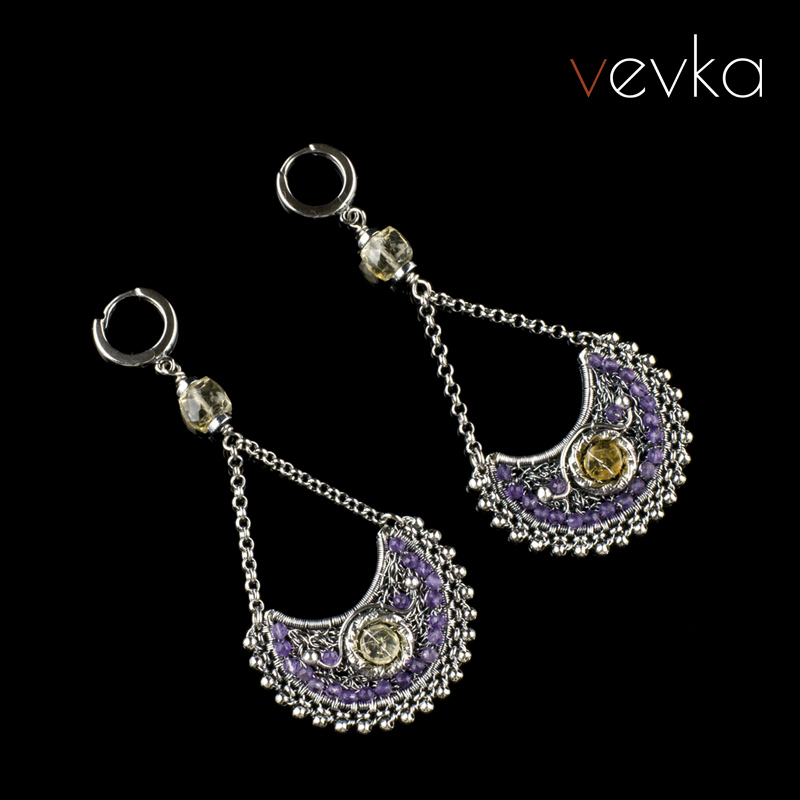
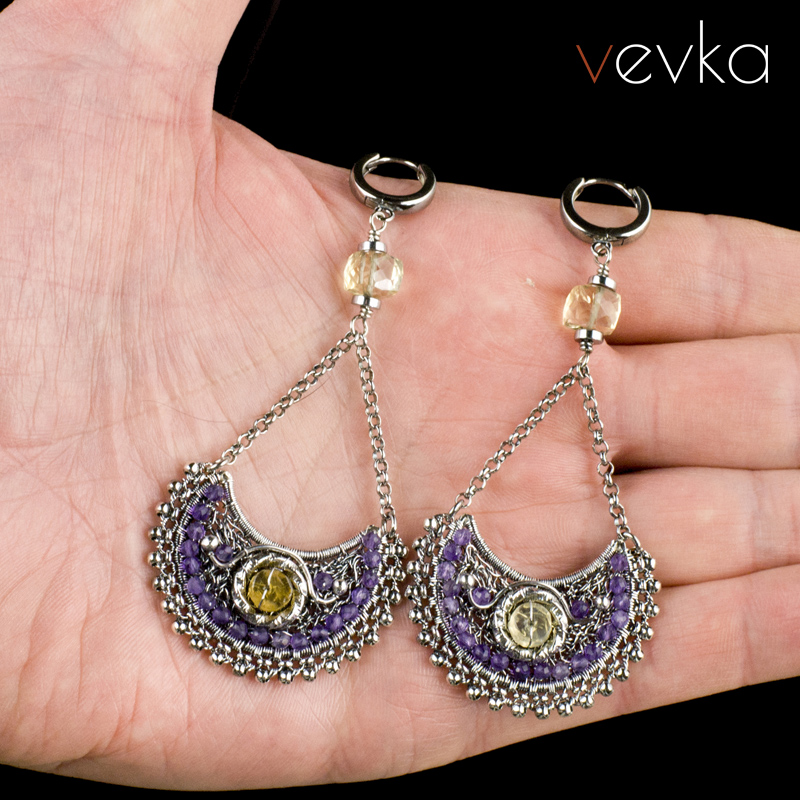
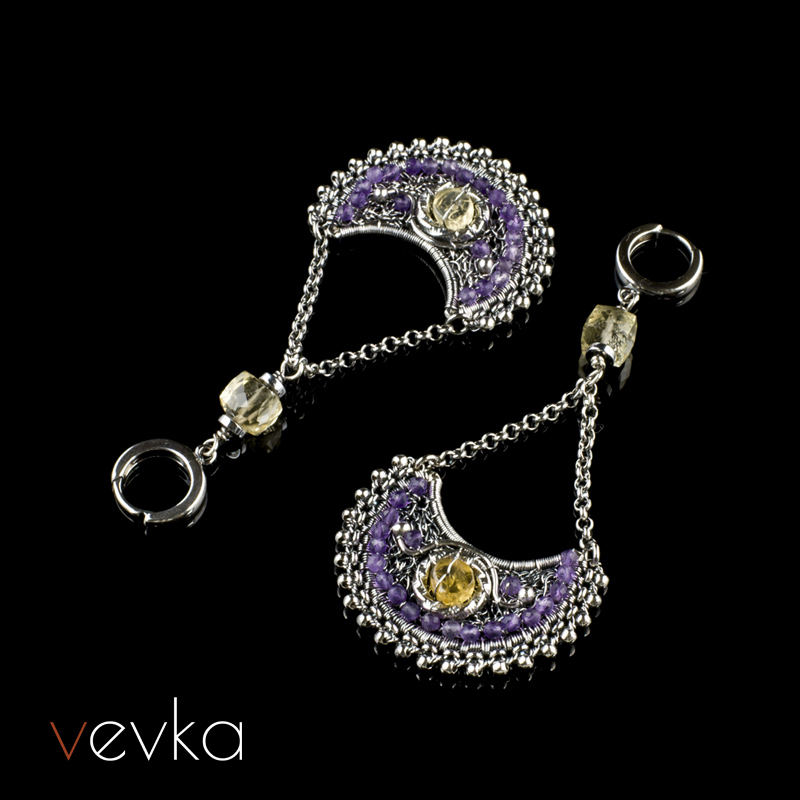
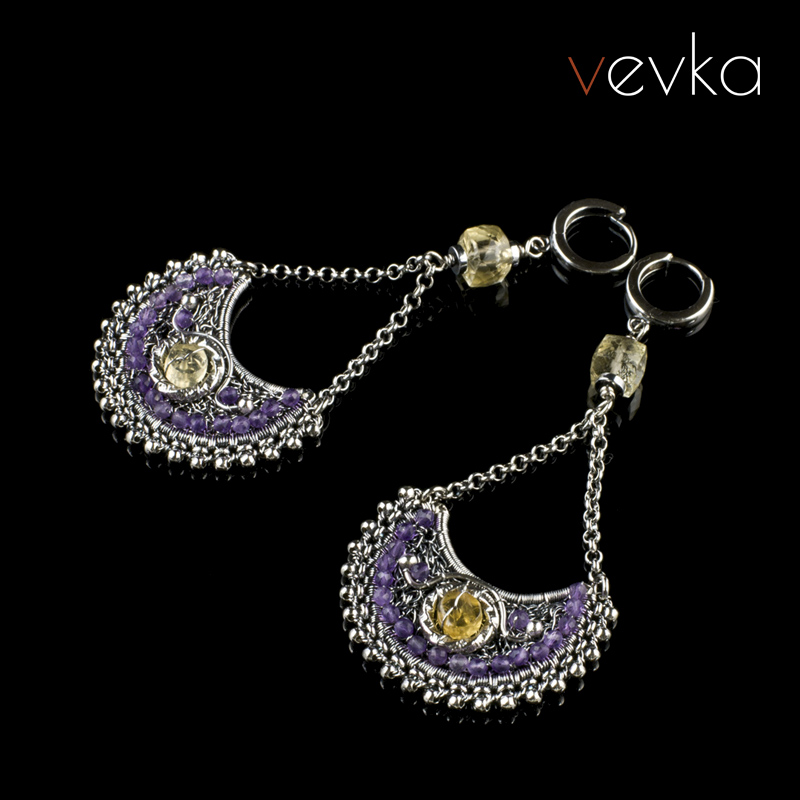
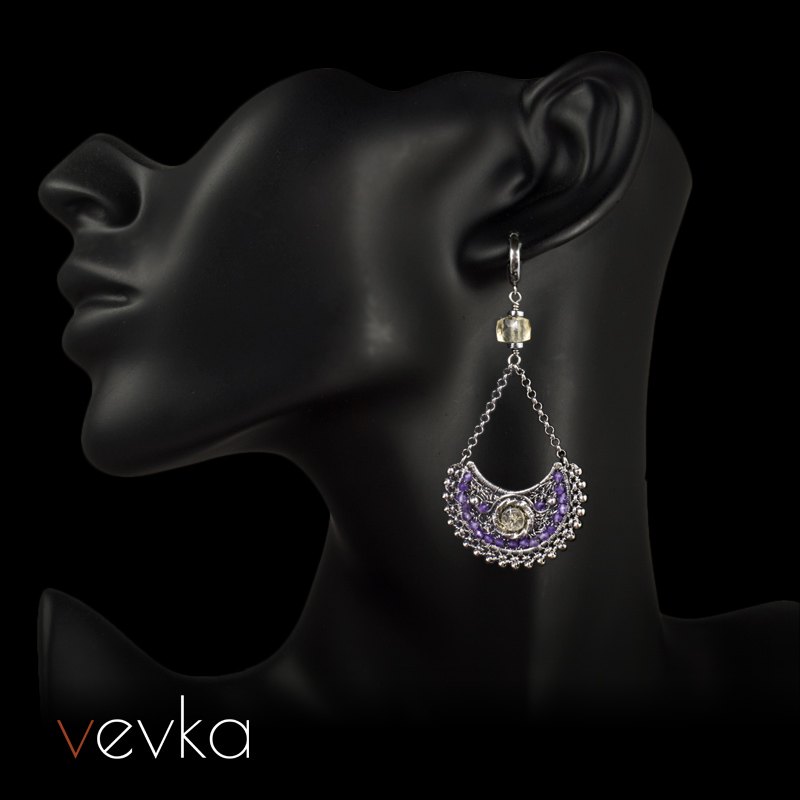

Subtle, delicate, and very feminine earrings made entirely by hand using the labor-intensive wire wrapping technique. The earrings were crafted from 999 and 925 silver, and faceted beads of amethyst and citrine. Tiny beads and rings of amethyst and citrine have been “sewn” onto the ethereal silver mesh with silver wire. The earrings are suspended on 925 silver lever-back type findings. A meticulous and very labor-intensive project. The entire piece is oxidized and carefully polished.
Amethyst, a stunning purple variety of quartz, has been valued for its beauty and rich color throughout history. Its name comes from the Greek word ‘amethystos’, meaning not intoxicated, as it was believed to protect its wearer from drunkenness. This gemstone has been cherished since ancient times, with its use in jewelry dating back to the Egyptians and later extensively by the Greeks and Romans. Amethyst is primarily found in Brazil, Uruguay, Siberia, and Zambia, with each location contributing to subtle variations in its color and quality.
Amethyst jewelry, known for its vibrant purple hue, has been a symbol of royalty and luxury for centuries. It is also the birthstone for February and is traditionally given as a gift for the sixth wedding anniversary. Amethyst earrings, in particular, are a popular choice, as the stone’s rich color creates a striking contrast against various metal settings. Besides its aesthetic appeal, amethyst is also known for its supposed calming and soothing properties, making it a favorite in both jewelry and healing practices. The stone’s affordability compared to other precious gems has made it accessible for a wide range of jewelry lovers. Amethyst’s enduring popularity is a testament to its timeless beauty and the allure of its captivating purple shade.
Citrine, a radiant variety of quartz, is prized for its yellow to orange hues, reminiscent of the sun. Its name is derived from the French word ‘citron’, meaning lemon, which aptly captures its lemony coloration. This gemstone has been valued since ancient times, adorning jewelry and artifacts of Greek and Roman civilizations. Citrine is predominantly found in Brazil, but significant deposits also exist in Spain, Russia, Madagascar, and the Ural Mountains.
Citrine jewelry, with its warm and sunny colors, has been a popular choice for centuries, appreciated for adding a touch of brightness to any attire. The popularity of citrine surged during the Art Deco period, where it was often used in elaborate, large-scale jewelry pieces. Citrine earrings are particularly favored for their ability to bring a vibrant pop of color close to the face, enhancing the wearer’s features. In addition to its aesthetic appeal, citrine is believed to carry the power of the sun, often associated with warmth, life, and positive energy.
Interestingly, much of the citrine on the market is heat-treated amethyst or smoky quartz, which turns a similar yellow color upon heating. However, natural citrine, especially high-quality deep-colored specimens, is highly sought after by collectors and jewelry enthusiasts. The stone’s affordability, compared to other precious gems, has made citrine jewelry accessible and popular. Its sunny disposition and versatility ensure that citrine remains a beloved choice for a variety of jewelry styles, from vintage to contemporary.
Materials:
– Amethyst
– Citrine
– Silver of 999 and 925 purity
Colors:
Purple, silver, graphite, yellow
Dimensions:
Total length of earrings without ear wires: 6.5 cm. Width: 3.5 cm. Weight of one earring: 7 g.
Reviews
There are no reviews yet.