
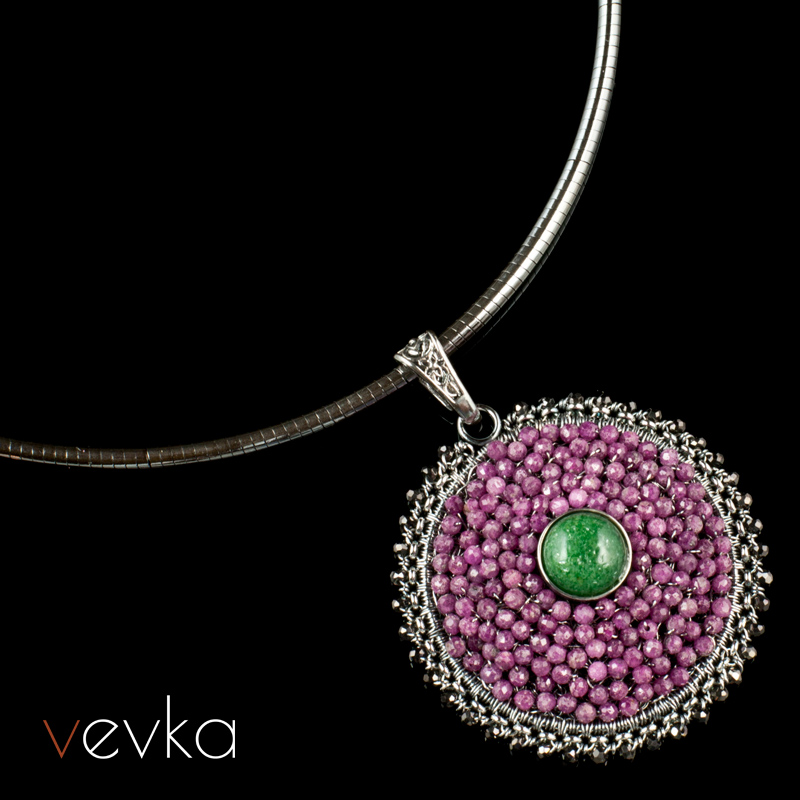
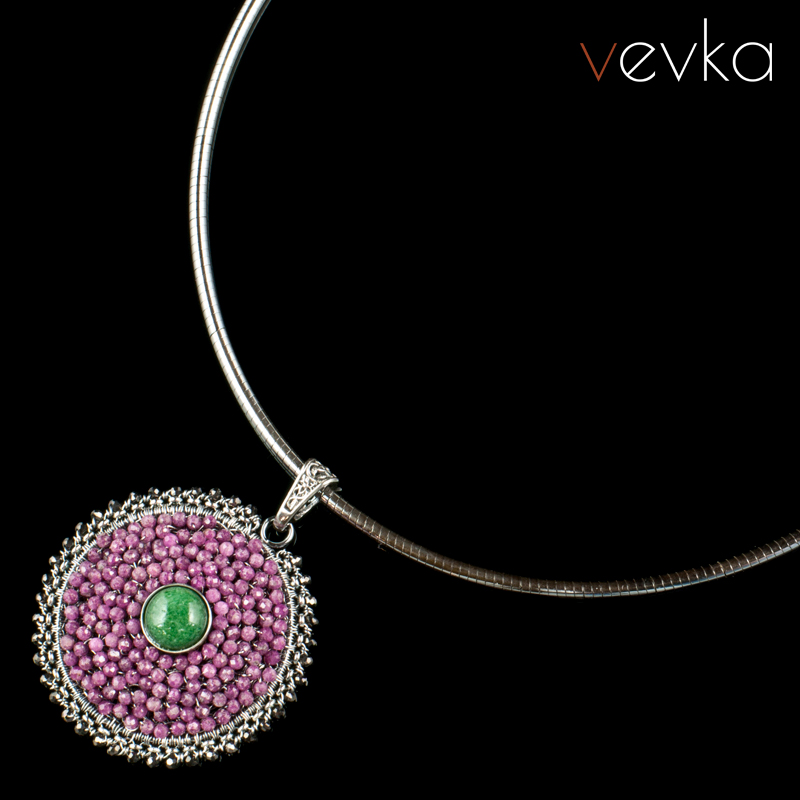
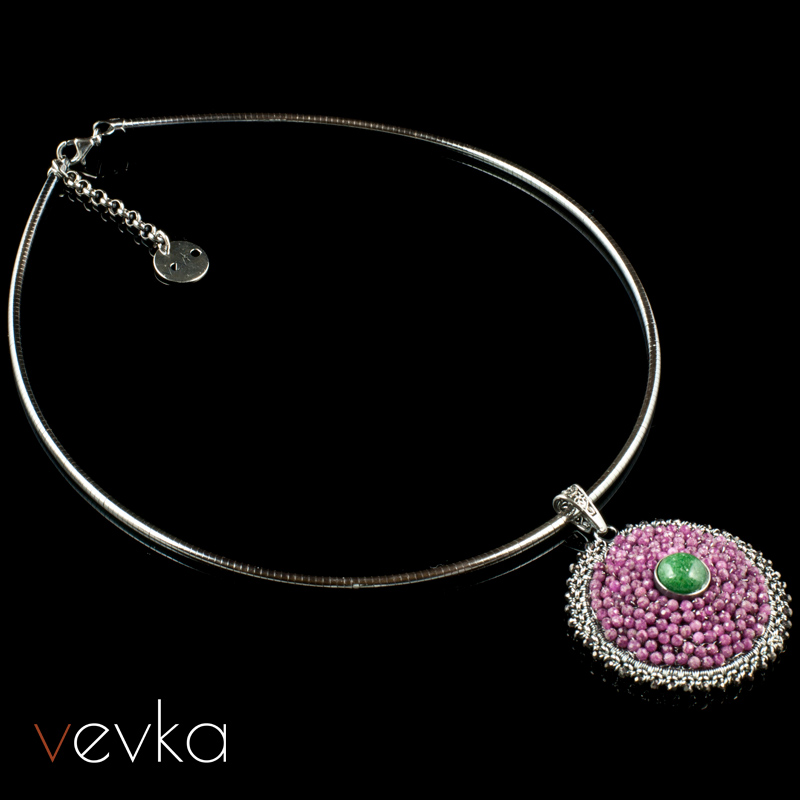
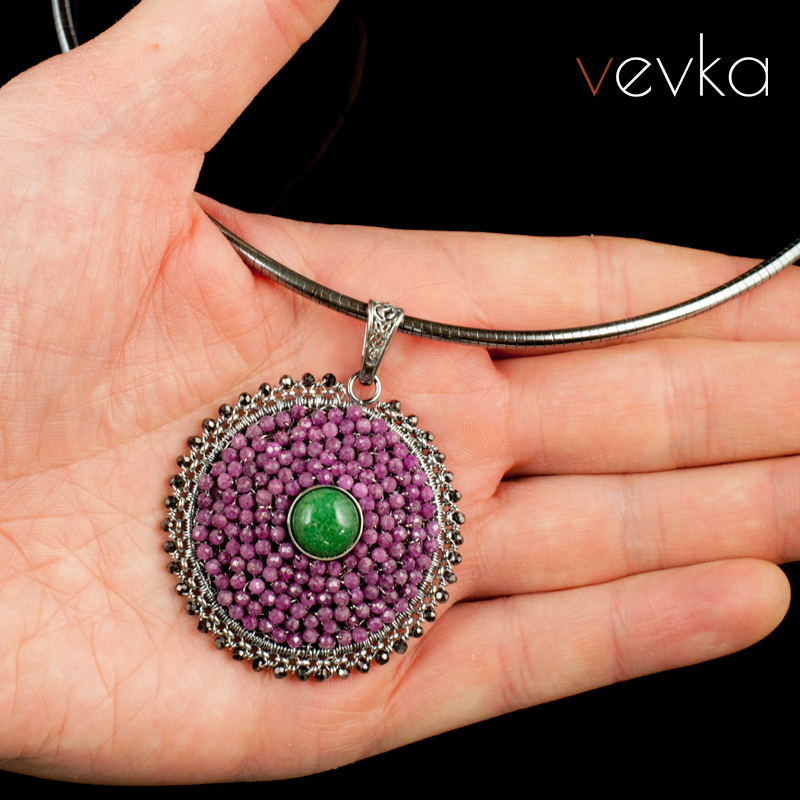
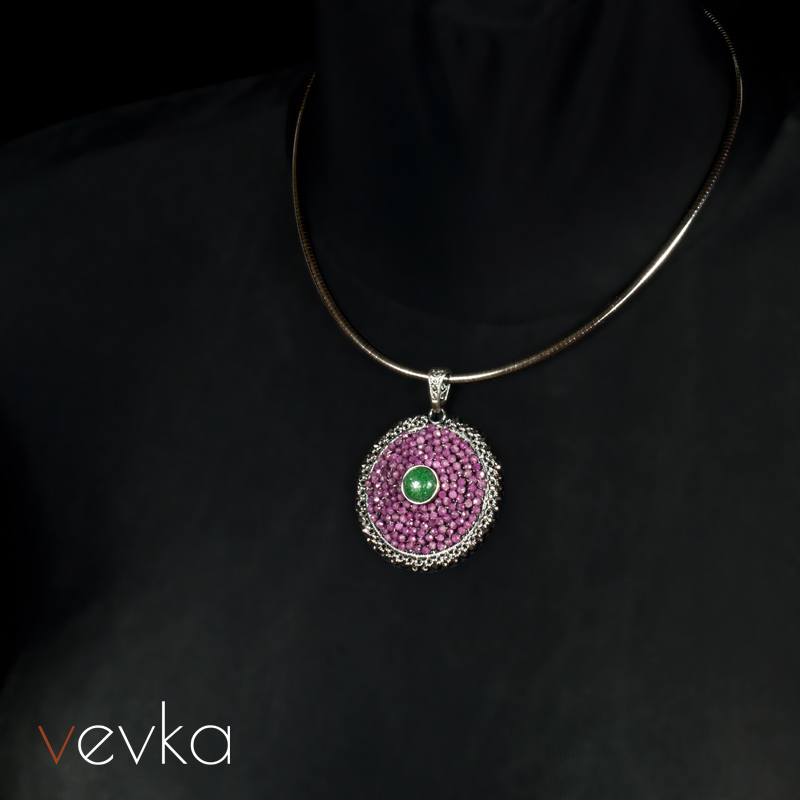

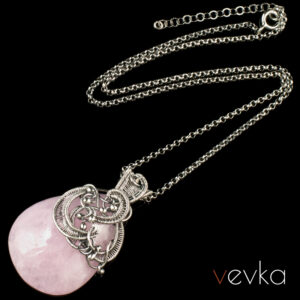
A pendant made from an aventurine cabochon, small faceted beads of natural ruby, tiny spinel beads, and 999 silver. I suspended the pendant on a 925 silver collar with a diameter of 3 mm. It was handcrafted using the labor-intensive wire wrapping technique.
Aventurine is a form of quartz characterized by its translucency and the presence of platy mineral inclusions that give it a shimmering or glistening effect, known as aventurescence. Its name derives from the Italian “a ventura,” meaning “by chance,” referring to the discovery of aventurine glass or goldstone. Originating from various parts of the world, including India, China, and Brazil, aventurine comes in a range of colors, with green being the most common. Historically, aventurine was used for statues and decorative purposes by ancient civilizations, and it has been valued for its beauty and supposed healing properties. Aventurine jewelry is popular for its sparkling allure and earthy tones, making it a versatile addition to any jewelry collection. An aventurine pendant, in particular, showcases the unique sparkle of this stone, capturing light in a way that enhances its natural beauty. These pendants are often crafted to highlight the stone’s natural textures, offering a piece of the earth’s magic to wear. Whether green, blue, or peach, aventurine pendants serve as a focal point in jewelry, embodying both the tranquility of nature and a touch of mystique.
Ruby, a precious gemstone known for its vibrant red color, is considered one of the four traditional cardinal gems, alongside sapphire, emerald, and diamond. Its name is derived from “ruber,” Latin for red, capturing the essence of its fiery hue. Rubies are primarily mined in Myanmar, historically known as Burma, which has been a significant source of high-quality rubies for centuries. Other notable sources include Thailand, Madagascar, and Vietnam. The rich history of ruby jewelry dates back to ancient times when rubies were revered by many cultures for their beauty and believed powers of protection and prosperity. A ruby pendant, elegantly showcasing this gem’s deep red color, can serve as a timeless piece of jewelry, often symbolizing passion, love, and courage. Rubies, with their hardness second only to diamonds, make durable and lasting pendants, embodying both the allure of the gemstone and the craftsmanship of the jeweler.
Spinel, a gemstone that has been mistaken for ruby and sapphire throughout history, is celebrated for its range of colors, from vibrant reds to deep blues. Its name is thought to have originated from the Latin word “spina,” meaning thorn, referring to its sharp crystal forms. Historically, spinel was often found in the same mining areas as ruby and sapphire, leading to its confusion with these more recognized gems. Significant sources of spinel include Myanmar, Vietnam, and Tajikistan, where some of the most prized specimens are found. Spinel jewelry, renowned for its brilliance and durability, has grown in popularity, with a spinel pendant being a sophisticated choice that showcases the stone’s natural beauty and the rich history it carries as a once-hidden gem among royalty and ancient treasures.
Materials:
– Aventurine
– Ruby
– Spinel
– Silver of 925 and 999 purity
Colors:
Green, pink, black, silver
Dimensions, weight:
Pendant length with bail: 5.8 cm. Diameter: 4.3 cm. Weight: 31 g. Collar length: 45 cm plus extension.
Reviews
There are no reviews yet.